
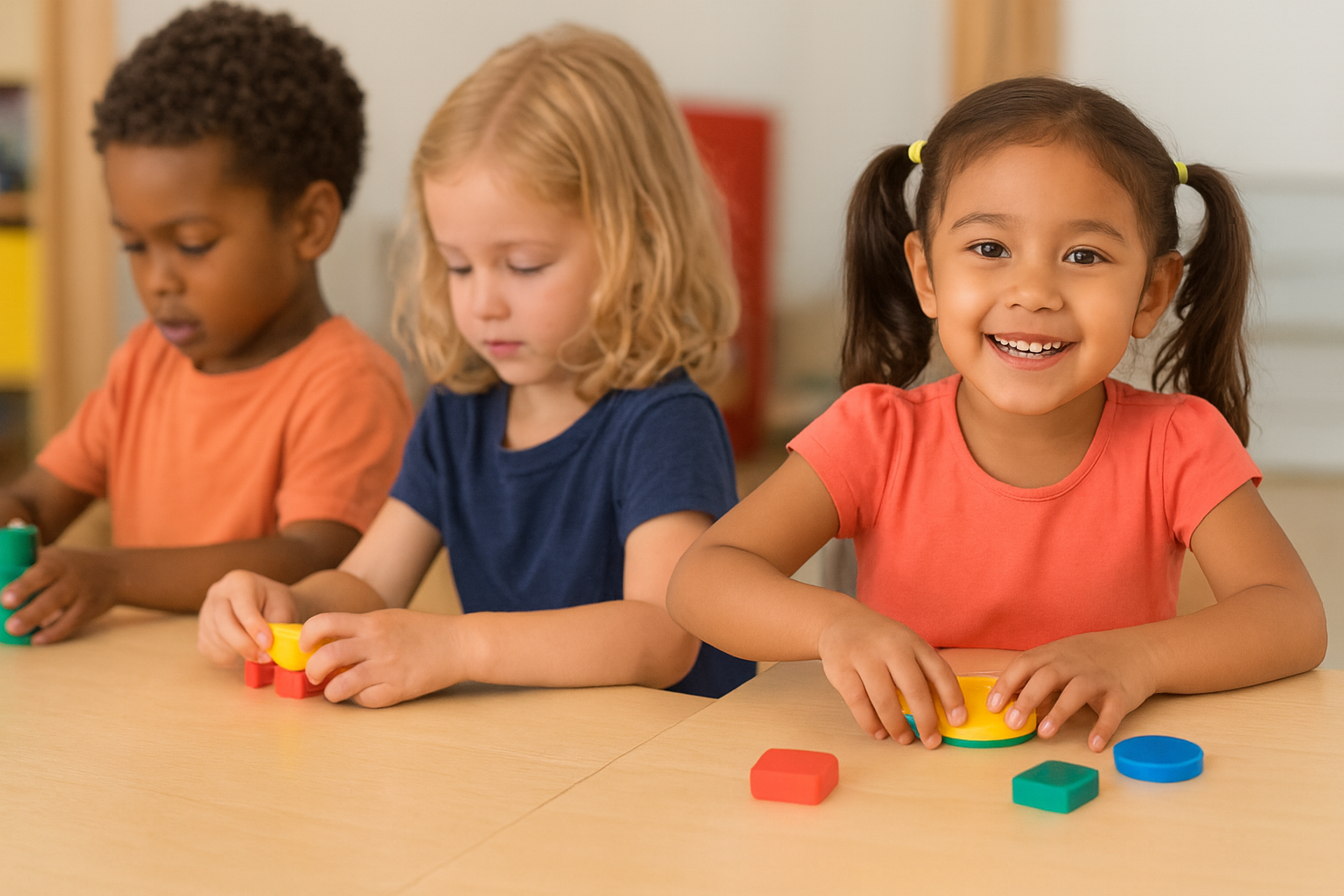
Early childhood is one of the most crucial periods in a child’s life. The experiences, environment, and learning opportunities children receive during their preschool years play a major role in shaping their future academic success, social skills, and emotional wellbeing. This is why choosing the right preschool is more than an educational decision—it is an investment in a child’s lifelong growth.
1. Building a Strong Educational Foundation
Preschool introduces children to the basics of learning in a fun and engaging way. Through storytelling, play-based activities, hands-on exploration, and structured routines, children begin to:
• Recognize numbers, shapes, and letters
• Develop early reading and writing readiness
• Build problem-solving and logical-thinking skills
• Develop curiosity and a love for learning
• These foundational skills make the transition to kindergarten smooth and enjoyable.
2. Developing Social and Emotional Skills
Preschool is often a child’s first experience interacting with peers in a structured environment. This environment helps children learn essential life skills such as:
• Sharing and taking turns
• Expressing emotions appropriately
• Building friendships
• Understanding empathy
• Following instructions and routines
• Teachers guide children gently, helping them grow into confident, emotionally secure individuals.
3. Enhancing Communication and Language Development
Through songs, conversations, stories, and play, children significantly improve their language abilities in preschool. They learn to:
• Express their needs and ideas clearly
• Expand their vocabulary
• Listen attentively
• Follow directions
• Engage in group discussions
• Strong language skills early on lead to improved academic performance later in life.
4. Encouraging Creativity and Imagination
Preschool is a place where creativity flourishes. With access to art materials, role-playing areas, music, and dance, children are encouraged to express themselves freely. Creative activities help children:
• Boost imagination
• Strengthen fine motor skills
• Build confidence
• Explore new ideas
• Develop innovative thinking
• These skills are valuable in academics, problem-solving, and future careers.
5. Promoting Physical Development
Active play is a key part of preschool learning. Children engage in outdoor games, sports, music and movement activities, and sensory play. These activities help develop:
• Gross motor skills (running, jumping, climbing)
• Fine motor skills (painting, drawing, cutting)
• Hand-eye coordination
• Body awareness and balance
• Physical activity is important not only for health but also for brain development.
6. Preparing Children for Formal Schooling
Preschool gently prepares children for the routines and expectations of formal education. They learn:
• Classroom etiquette
• Independence and responsibility
• Time management
• Basic academic concepts
• Confidence to speak and participate
This early preparation reduces anxiety and helps children adjust smoothly to kindergarten and elementary school.
Conclusion
Preschool is much more than childcare—it is a nurturing environment that shapes a child’s cognitive, social, emotional, and physical development. By enrolling your child in a quality preschool, you are giving them a strong start in life and setting the foundation for future success.